
Internal Walnut Doors
-
LPD Vancouver Walnut Fully Finished Internal Laminated Door LAMWALVAN
Regular price £167.45Regular price -
Deanta Flush Fully Finished Walnut 6mm Lipping 35FLWX
Regular price From £167.75Regular price£201.30Sale price From £167.75Save £33.55
Sale -
LPD Sofia Fully Finished Internal Walnut Door WSOFIA
Regular price From £180.58Regular price£196.00Sale price From £180.58Save £15.42
Sale -
Deanta Flush Fully Finished Walnut FD30 6mm Lipping Fire Door 45FLWFDX
Regular price From £183.50Regular price£220.20Sale price From £183.50Save £36.70
Sale -
Deanta Coventry Fully Finished Internal Walnut Door 35HP1WXFSC
Regular price £198.00Regular price£231.30Sale price £198.00Save £33.30
Sale -
Deanta Seville Fully Finished Internal Walnut Door 35UK12WXFSC
Regular price From £204.75Regular price£240.30Sale price From £204.75Save £35.55
Sale -
Deanta Pamplona Fully Finished Internal Walnut Door 35PAMPWXFSC
Regular price £215.25Regular price£252.00Sale price £215.25Save £36.75
Sale -
LPD Vancouver Fully Finished Walnut Internal Door WALVAN
Regular price From £217.73Regular price£244.15Sale price From £217.73Save £26.42
Sale -
LPD Vancouver Walnut Glazed Fully Finished Internal Laminated Door LAMWALVANGL
Regular price £218.21Regular price -
LPD Sofia Fully Finished Internal Walnut Door WSOFIAFC
Regular price £219.07Regular price£239.00Sale price £219.07Save £19.93
Sale -
Deanta Cadiz Fully Finished Internal Walnut Door 35CADWXFSC
Regular price £231.75Regular price£271.80Sale price £231.75Save £40.05
Sale -
Deanta Valencia Fully Finished Internal Walnut Door 35VALWXFSC
Regular price £231.75Regular price£271.80Sale price £231.75Save £40.05
Sale -
LPD Vancouver Walnut Fully Finished Internal Laminated Fire Door LAMWALVANFC
Regular price £235.11Regular price -
Deanta Coventry Fully Finished Internal Walnut Door with Clear Glass 35HP1WGCXFSC
Regular price £237.00Regular price£277.20Sale price £237.00Save £40.20
Sale -
Deanta Coventry Fully Finished Internal Walnut Fire Door 45HP1WF/DXFSC
Regular price £245.25Regular price£288.00Sale price £245.25Save £42.75
Sale -
Deanta Kensington Fully Finished Internal Walnut Door 35KENSWXFSC
Regular price From £249.00Regular price£292.50Sale price From £249.00Save £43.50
Sale -
LPD Tres Fully Finished Internal Walnut Door TREWAL
Regular price £252.26Regular price£282.90Sale price £252.26Save £30.64
Sale -
Deanta Seville Fully Finished Internal Walnut Fire Door 45UK12WF/DXFSC
Regular price From £254.25Regular price£270.00Sale price From £254.25Save £15.75
Sale -
Deanta Pamplona Fully Finished Internal Walnut Door with Clear Glass 35PAMPWGBXFSC
Regular price £261.00Regular price£306.00Sale price £261.00Save £45.00
Sale -
LPD Sofia Glazed Fully Finished Internal Walnut Door WSOFIAGL
Regular price From £265.87Regular price£298.15Sale price From £265.87Save £32.28
Sale -
Deanta Coventry Fully Finished Internal Walnut Door with Obscure Glass 35HP1WGFXFSC
Regular price £266.25Regular price£312.30Sale price £266.25Save £46.05
Sale -
Deanta Cadiz Fully Finished Internal Walnut Door with Clear Glass 35CADWGXFSC
Regular price £273.75Regular price£320.40Sale price £273.75Save £46.65
Sale -
LPD Vancouver Fully Finished Walnut Internal Fire Door WALVANFC
Regular price £274.62Regular price£308.00Sale price £274.62Save £33.38
Sale -
Deanta Pamplona Fully Finished Internal Walnut Fire Door 45PAMPF/DWXFSC
Regular price £278.25Regular price£325.80Sale price £278.25Save £47.55
Sale

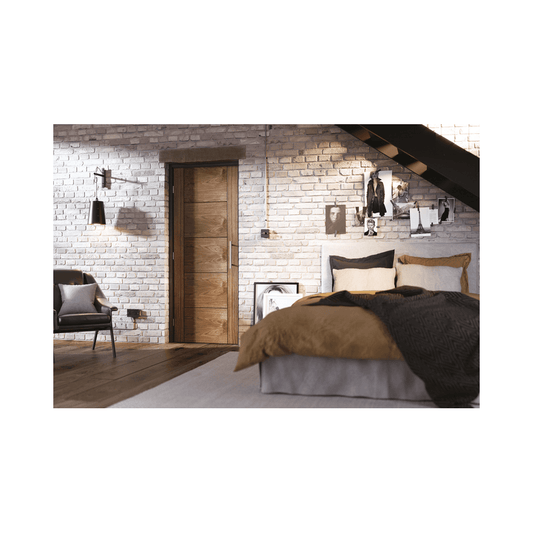

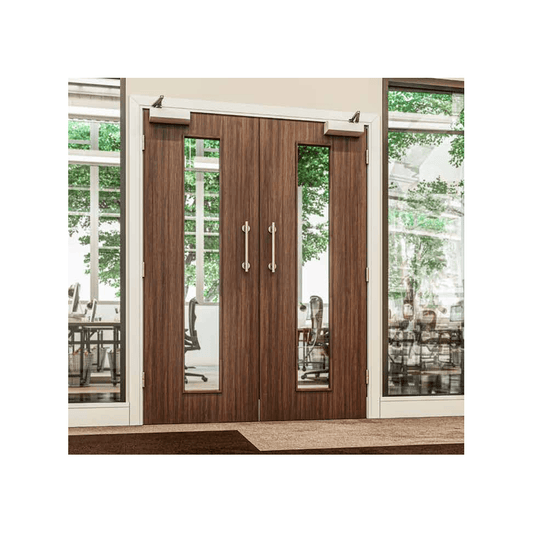




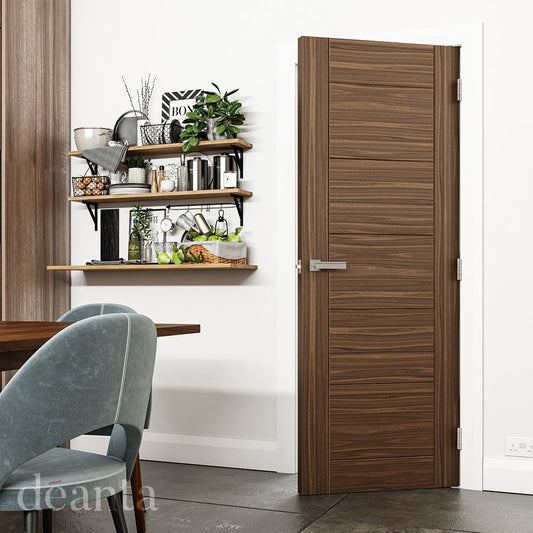












About this range
- From
- £167.45
- Products
- 35
- Materials
- Walnut
- Finishes
- Fully finished
- Glazing
- Unglazed, Glazed
- Brands
- Deanta, LPD, Doors2Floors
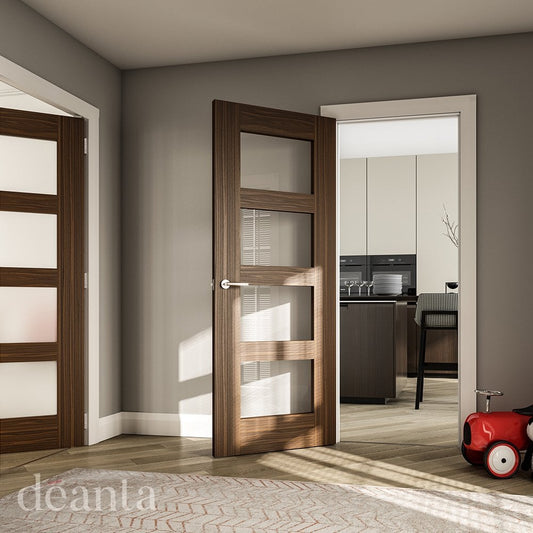
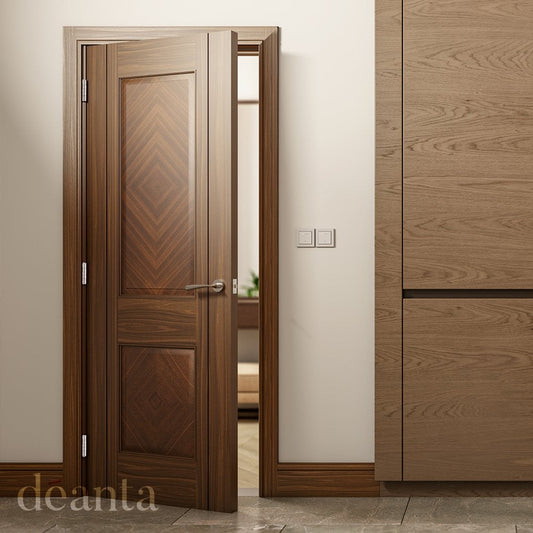
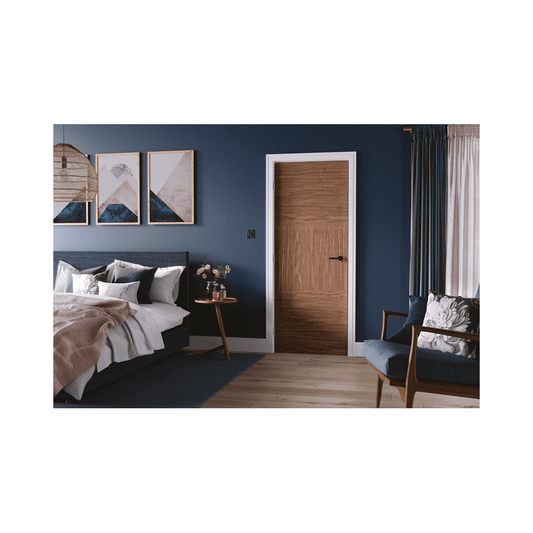
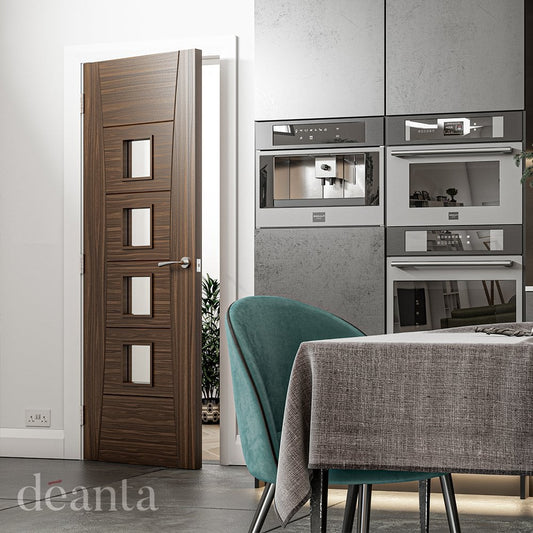
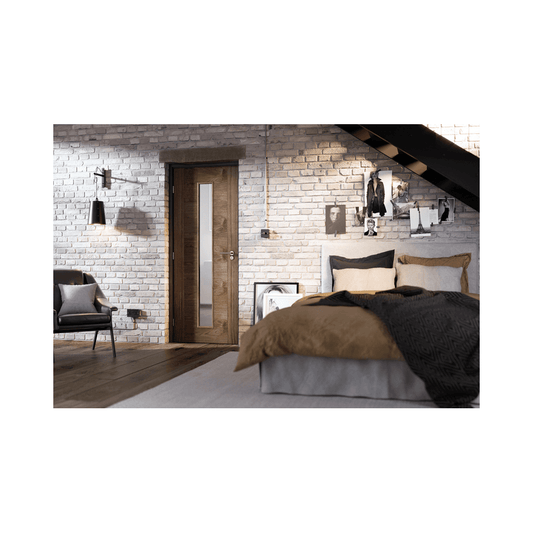
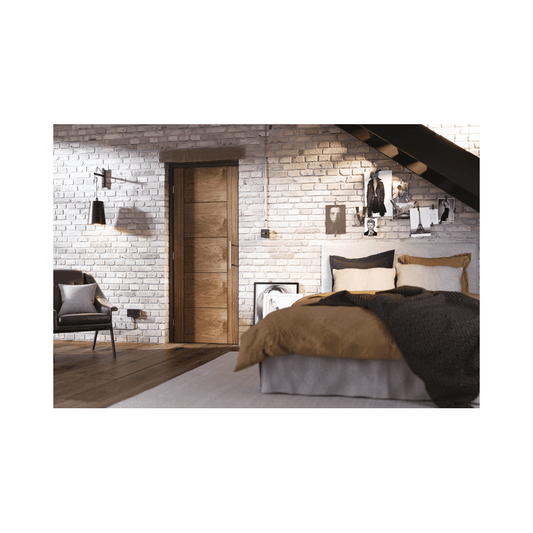
Walnut is the darkest timber finish in common use on British internal doors, and the most formal. Where oak reads as warm and neutral, walnut reads as considered, with a chocolate brown ground and a fine, close grain that catches light along the panel edges. This collection holds 35 walnut internal doors, mostly Deanta with a smaller LPD selection, from £167.45 to £678.75.
Every walnut door here is fully finished
Every door in this collection arrives fully finished, and that is deliberate rather than a gap in the range. Walnut is difficult to finish well on site, because the colour sits deep in the grain and a site applied lacquer or oil tends to muddy it or leave a patchy, orange cast. Buying the factory finish means the colour is consistent across every door in the order and there is nothing to do beyond hanging them. It also means you cannot change the tone later, so it is worth seeing the finish before committing to a whole floor.
How walnut doors are built
Like oak, these are engineered doors: a real walnut veneer over a stable core, edged with a solid lipping. Solid walnut would be prohibitively expensive and would move too much in a heated house. The lipping is worth noting when ordering, because a lipped door gives a little more trimming allowance and a crisper edge once hung. Several doors in the range specify a 6mm lipping for that reason.
Where walnut belongs
Walnut is at its best where there is plenty of light to work against and a pale floor or pale walls to frame it. It suits studies, dining rooms, principal bedrooms and any room with a formal intent. It struggles in a narrow, dark hallway, where it will close the space down. If walnut is wanted in a darker corridor, choose a glazed design so the panel borrows light from the room behind. 5 of the doors here are glazed, with clear glass the usual option. See glazed internal doors.
Flooring is the decision that makes or breaks walnut. A mid brown oak floor will fight it, because the two browns sit close enough to look like a mistake. Pale oak, grey toned floors and stone all give walnut the contrast it needs. Our flooring range and flooring buying guide cover the options.
Designs
Vancouver, Coventry and Pamplona are the most stocked designs in walnut, alongside Seville, Sofia, Cadiz and Valencia. Flush walnut doors are the plainest and let the veneer do the work, which is usually the right choice in a contemporary room. Grooved and vertically panelled designs add shadow lines that read well in walnut because the dark ground exaggerates the relief.
Walnut fire doors
17 of these doors are fire rated, including 11 FD30. That is useful, because walnut is often wanted on exactly the doors that need a rating in a converted or three storey house. A rated leaf is 44mm rather than 35mm thick and only performs as part of a complete assembly with the correct frame, intumescent seals and three fire rated hinges. See walnut fire doors and our fire door guide.
Handles for walnut
Walnut takes warm metals better than cool ones. Antique brass, bronze and satin brass sit naturally against the grain, while bright chrome can look cold. Matt black gives a clean modern contrast without competing. See door handles and the door handles guide.
Sizes
Standard walnut internal doors are 35mm thick, with fire rated versions at 44mm. Imperial widths of 686mm and 762mm at 1981mm high cover most rooms, with metric 2040mm heights in newer housing. Check against our door size guide and how to measure a door before ordering.
Walnut or oak
Oak is more forgiving, cheaper, easier to match to flooring and safer for resale. Walnut is more distinctive and looks more expensive, which is exactly why it works in a small number of rooms rather than throughout a house. Oak against walnut compares them directly, and internal oak doors holds the alternative.
Common questions
Is this solid walnut?
No. These are engineered doors with a genuine walnut veneer and a solid lipping over a stable core, which is the correct construction for a centrally heated house.
Will walnut fade?
Walnut lightens slightly in strong direct sunlight over years rather than months. Where one door gets much more sun than the others, that difference can eventually show.
How do I clean walnut doors?
A soft damp cloth and nothing abrasive. Avoid silicone polishes on a lacquered surface. See product care.
Can I mix walnut and white doors?
Yes, and it is a common arrangement, with walnut on the principal rooms and white on bathrooms and cupboards. Keep the split logical rather than random.
What else does the order need?
Hinges, a latch or lock and a handle set per door, plus a lining and architrave on a new opening. Plan your doors lists it in order, and the full range is at internal doors.
Fast delivery
Nationwide delivery, next-day available
Secure payment
Safe and encrypted checkout
Payment options
PayPal, cards and more
VAT included
Only delivery is added at checkout