
Internal White Primed Doors
-
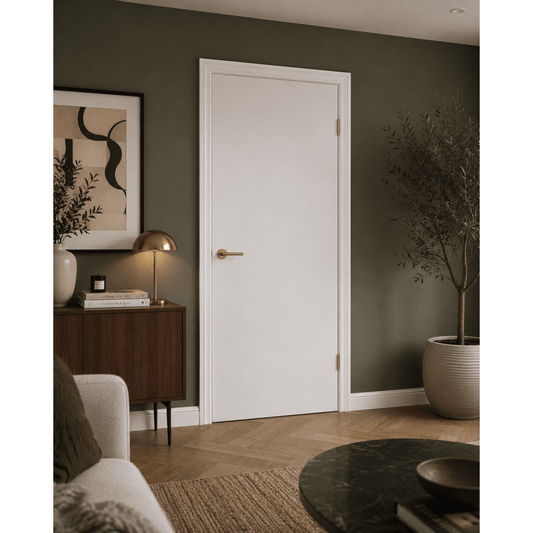
LPD White Primed Flush Internal Door WPFLU
Regular price From £30.84Regular price -
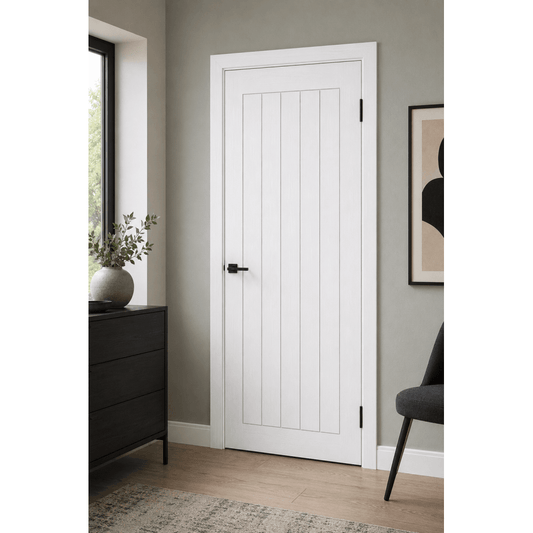
LPD Smooth Cottage White Primed Internal Door SMOCOT
Regular price From £55.99Regular price -
LPD Ladder Smooth Internal White Primed Door SMOLAD
Regular price From £70.45Regular price -
LPD Ladder White Fully Finished Laminated Internal Door LAMWHILAD
Regular price £73.50Regular price -
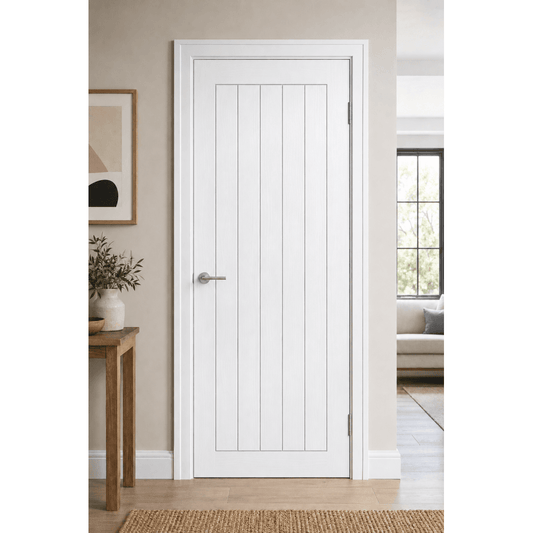
LPD Textured Vertical 5 Panel Internal White Primed Door TEXV5P
Regular price From £79.35Regular price -
Deanta Ely White Primed Internal Door 35ELYWHP
Regular price From £81.75Regular price£100.80Sale price From £81.75Save £19.05
Sale -
Deanta Seville White Primed SEVWHP
Regular price From £81.75Regular price£92.00Sale price From £81.75Save £10.25
Sale -
LPD White Primed Flush Internal Fire Door WPFD
Regular price From £87.39Regular price -
LPD Smooth Cottage White Primed Internal FD0 Fire Door SMOCOTFC
Regular price £94.50Regular price -
LPD Girona White Primed Internal Door GIRWP
Regular price From £104.93Regular price -
Deanta Flush White Primed Door 35FLWH
Regular price From £105.00Regular price£126.00Sale price From £105.00Save £21.00
Sale -
Deanta Cambridge White Primed CAMBWHP
Regular price From £107.25Regular price£126.00Sale price From £107.25Save £18.75
Sale -
LPD Smooth Cottage White Primed Glazed Internal Door SMOCOTGL
Regular price £107.25Regular price -
Deanta Flush White Primed Fire Door FD30 45FLFDWH
Regular price From £110.00Regular price£132.00Sale price From £110.00Save £22.00
Sale -
Deanta Coventry White Primed Internal Door 35COVWHP
Regular price From £110.25Regular price£129.60Sale price From £110.25Save £19.35
Sale -
Deanta Eton White Primed Internal Door 35ETOWHP
Regular price From £114.75Regular price£135.00Sale price From £114.75Save £20.25
Sale -
Deanta Madison White Primed Internal Door 35NM3WHP
Regular price From £115.50Regular price£135.90Sale price From £115.50Save £20.40
Sale -
LPD Ladder White Fully Finished Laminated Internal Fire Door LAMWHILADFC
Regular price £118.50Regular price -
LPD Ladder White Fully Finished Laminated Internal Glazed Door LAMWHILADGL
Regular price £123.00Regular price -
Deanta Coventry White Primed Internal Door with Clear Glass 35COVGCWH
Regular price From £130.50Regular price£153.00Sale price From £130.50Save £22.50
Sale -
Deanta Denver White Primed Internal Door with Clear Glass 35NM6GWHP
Regular price £130.50Regular price£153.00Sale price £130.50Save £22.50
Sale -
Deanta Ravello White Primed Internal Door 40RAVWHP
Regular price From £130.50Regular price£153.00Sale price From £130.50Save £22.50
Sale -
Deanta Pamplona White Primed Internal Door 35PAMPWHP
Regular price £132.00Regular price£154.80Sale price £132.00Save £22.80
Sale -
LPD Textured Vertical 5 Panel Internal White Primed Fire Door FCTEXV5P
Regular price From £140.65Regular price























About this range
- From
- £30.84
- Products
- 82
- Materials
- White primed
- Finishes
- Primed
- Glazing
- Unglazed, Glazed
- Brands
- Deanta, LPD, Doors2Floors
White internal doors are the most ordered finish in Britain, because white brightens a dark landing, matches any wall colour and costs less than a timber veneer. Every door in this collection is white primed, which is an important distinction and the first thing to understand before ordering. There are 82 of them, mostly Deanta with a smaller LPD selection, from £30.84 to £684.75.
Primed is not the same as finished
A white primed door arrives with a factory applied base coat. It looks white in the photograph and it looks white when it is delivered, but the primer is a key for paint rather than a finished surface. It will mark, it will pick up handprints around the handle, and over time it yellows. Every primed door needs a light sand and two topcoats before it goes into service, and the edges need doing at the same time.
That is not a drawback if you know about it. Priming is what makes these doors cheap, and painting them yourself means you choose the exact white, or a colour, and you get a better finish around the handle than most factory paint offers. It only becomes a problem when a buyer expects to hang the door straight out of the packaging. Pre finished, unfinished and primed doors compared sets out the difference and the true cost of each, and how to paint an interior door covers the method.
Which paint to use
Doors get touched more than walls, so an emulsion will not survive. Use an eggshell, satin or gloss designed for wood and metal, and allow the recoat time on the tin rather than the time you would like. Two thin coats beat one thick one every time. Paint the edges as well as the faces, including the top and bottom, which is the step most people skip and the reason doors swell in bathrooms. Maintaining painted doors covers keeping the finish good afterwards, and product care covers cleaning.
What is in the range
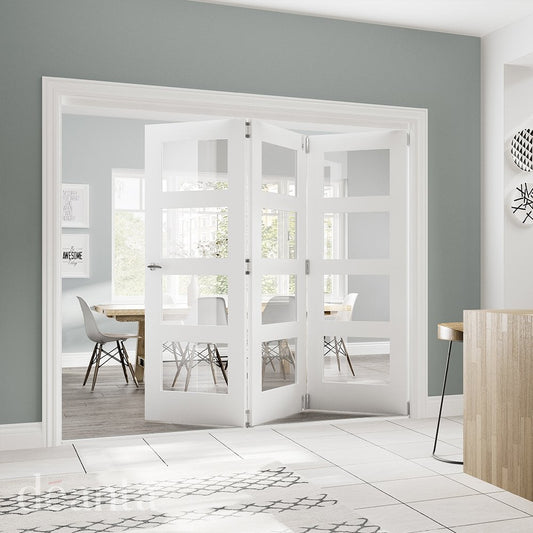
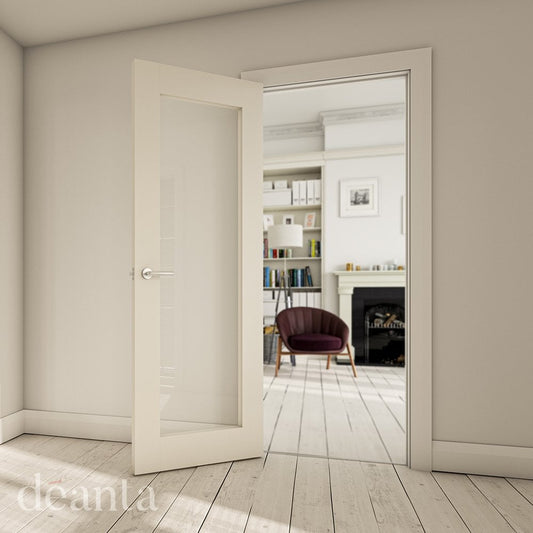
52 of these doors are solid and 29 are glazed. Glazed white doors are the standard fix for a hallway with no window, and clear and bevelled glass are the common options. More than 30 doors are fire rated, with 21 FD30 and 2 FD60, which matters if a white door is wanted on a garage or stairwell opening where a rating is required. See glazed internal doors, unglazed doors and white fire doors.
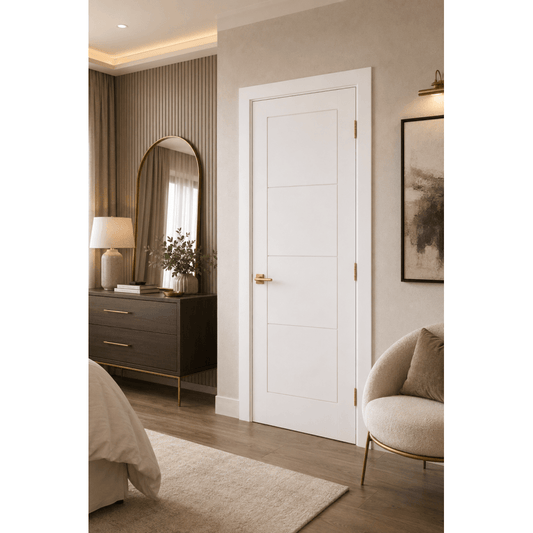
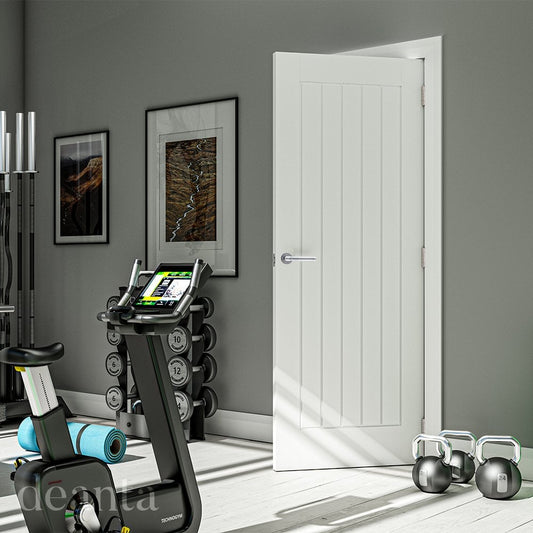
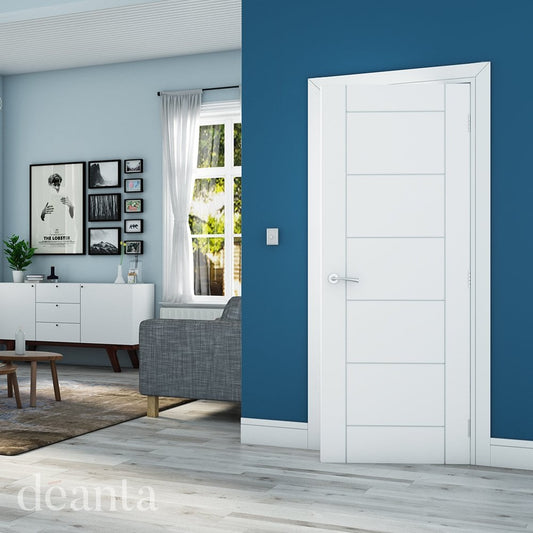
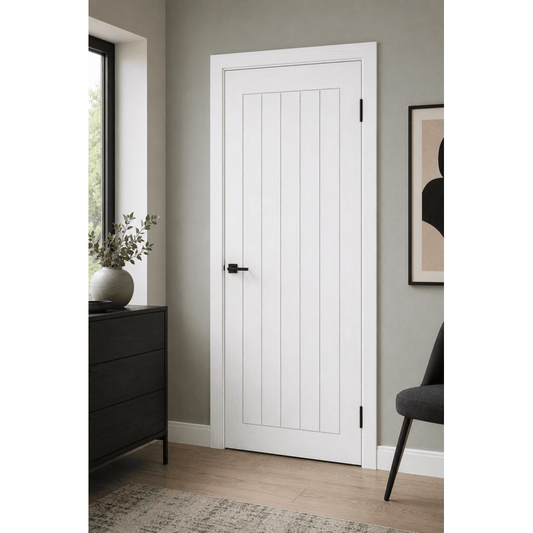
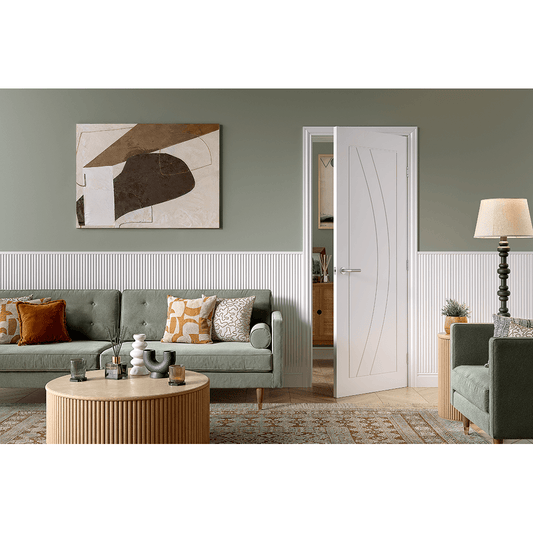
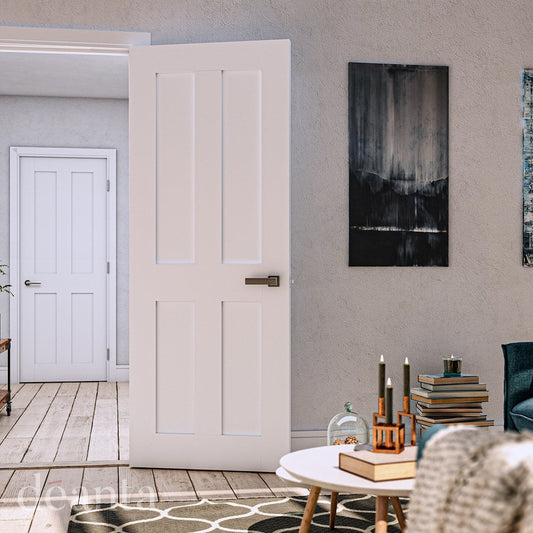
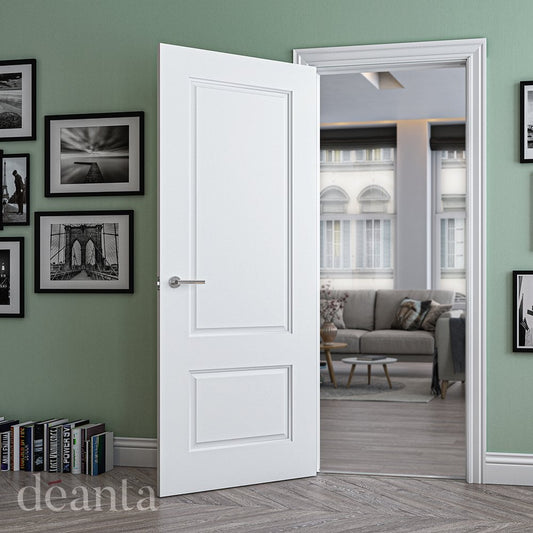
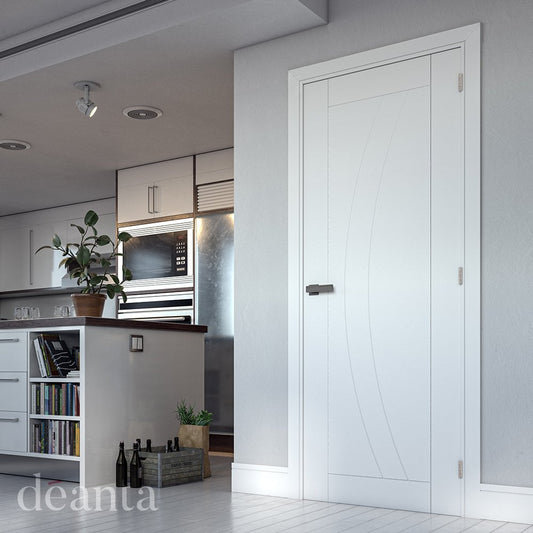
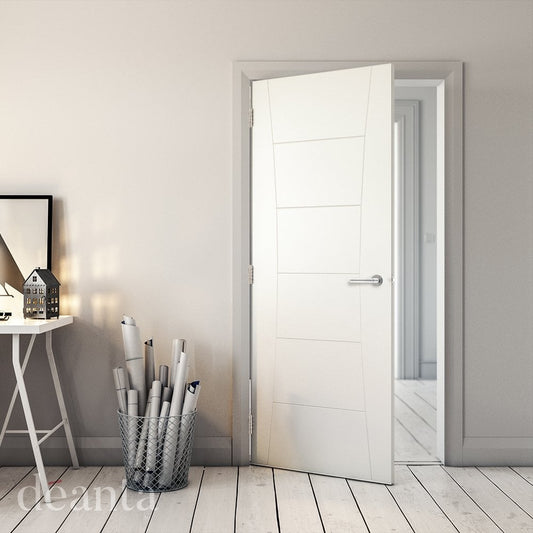
The designs cover the full range of British door shapes. Smooth and flush faces suit minimal interiors and take paint most easily. Seville, Coventry and Girona are cleaner contemporary arrangements. Windsor, Sandringham, Cambridge, Eton and Clarendon keep a traditional panelled layout that suits a Victorian or Edwardian house. Cottage designs use plank faces. Because the surface is primed rather than veneered, the shape of the door is doing all of the work, so it is worth choosing a profile that matches the age of the property.
White doors and painted panelling
White primed doors are the natural partner for painted wall panelling, because both are finished on site in the same paint and can be matched exactly. That is much harder to achieve with a factory finished door. If panelling is part of the plan, look at wall panelling and traditional wall panels and buy the paint once for both.
Sizes
Standard white primed internal doors are 35mm thick, with fire rated versions at 44mm. Imperial widths of 686mm and 762mm at 1981mm high cover most rooms, 610mm and 533mm suit cupboards, and metric 2040mm heights appear in newer housing. Check the leaf you already have where possible, then confirm against our door size guide and how to measure a door.
White or timber
White is brighter, cheaper and easier to match. Oak hides wear better and needs no painting. Grey has become the middle ground for people who find white too stark. All three are stocked, at internal oak doors and internal grey doors. White against oak internal doors works through the decision, and the guide to the best white internal doors picks out specific designs.
Common questions
Do I really have to paint them?
Yes. Primer is a base coat. Left bare it marks easily and discolours.
How much paint does a door take?
Roughly a litre covers three to four doors in two coats, depending on the profile. Panelled and grooved designs take more than flush ones.
Should I paint before or after hanging?
Before, laid flat, then touch in after fitting. Painting a hung door leaves runs on the panel edges.
Can primed doors be sprayed?
Yes, and it gives the best finish on a flush door. Keep the ironmongery and glazing masked.
Are white doors dated?
No. They are the most common internal door in the country and the safest choice in a small or dark home. Colour trends move; white walls and white doors do not date in the same way.
What else do I need?
Hinges, a latch or lock and a handle set for each door, plus a lining and architrave on a new opening. Door handles, door hinges and plan your doors cover the rest, and the full range is at internal doors.
Range guides
For a closer look at one of the most popular white primed ranges we stock, read the Deanta Windsor white primed internal door buying guide, and see the full Deanta doors range.
Do white primed doors come as bi-folds?
They do. Textured four panel, textured six panel, Pattern 10 and Vancouver are all made as primed white folding leaves, glazed and unglazed. See bi-fold doors, and check clearance doors for primed leaves at run-out prices.
Fast delivery
Nationwide delivery, next-day available
Secure payment
Safe and encrypted checkout
Payment options
PayPal, cards and more
VAT included
Only delivery is added at checkout